Tuesday, September 05, 2006

Afghanistan Wrapup for September 4, 2006

Updated January 29, 2008:

Monday, September 4

****
Yusuf Khel and Yahya Khel, Paktika Province, 1 AM: Taliban guerrillas attacked these two towns, killing 2 policemen and wounding 3 more in the separate attacks. The two towns are located near one another. Yusuf Khel (map here) is in Sarobi District, 7 miles southwest of the capital of Sarobi.

Yahya Khel (map here) is in the Gomal District, 7 1/2 miles north of the capital of Gomal. Although the article says they are near the Pakistani border, actually the towns are near the center of Paktika Province.
*****

****
Garmser, Garmser District, Helmand Province, Early: Guerrillas attacked a police headquarters in Garmser, the capital of Garmser District. 16 Taliban and 3 police were killed. Garmser is located in the Margo Desert, or the Desert of Death.

Most of the towns here are located along the Helmand River, where the principal crop is opium. This is a very fundamentalist region that is basically controlled by the Taliban and drug traffickers. The Margo Desert is a formless rock desert with few landmarks and little or nothing grows there, except along the river.
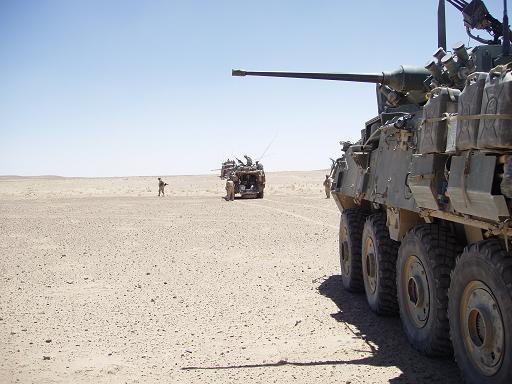
A photo of the Margo ("Death") Desert in Helmand Province. The Margo extends across southern Helmand and Nimruz Provinces, following the Helmand River. The river ends in a series of marshes just inside Iran called the Hamun or Sistan Salt Marshes. This interesting marshy area in the middle of a searing desert is rapidly deteriorating due to water diversions.

The Margo is a formless desert with few landmarks, yet the locals somehow never get lost there and find their way around quite well. Garmser is located in the Margo Desert.
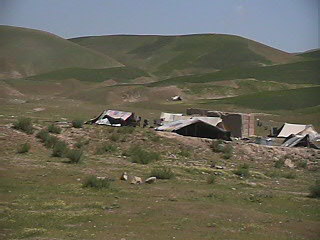

Kuchi nomads camping in the Margo Desert. There are actually some plants growing in parts of this desert, but it is mostly one type of very hardy plant. The Kuchis, who dress in colorful outfits, wander around parts of Afghanistan with their herds looking for areas to seasonally graze their flocks.

They are similar in some respects to the Gypsies but differ in many other ways. They are Muslims and have a deep tribal code about taking in outsiders. One story said that Ayman Zawahiri, the #2 Al Qaeda leader, was seen traveling with a group of Kuchis in Paktia and Khost Provinces in 2002.
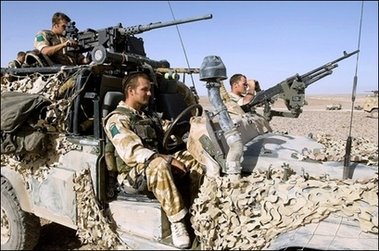

British troops in the Registan Desert in Helmand Province. Most of the Registan is in southern Kandahar Province, but part of it extends into Helmand near Garmser.


*****

*****
Pashmul, Panjwayi District, Kandahar Province: Coalition forces reported that 200 Taliban had been killed so far in Operation Medusa, that began on Saturday. The operation is apparently centered around the Panjwayi District in Kandahar. Afghan forces reported 89 Taliban were killed, 80 more surrendered and a further 180 fled.

What is interesting is that a while back US and Afghan authorities felt that there were only 200 Taliban in all of Panjwayi Province. Those 200 Taliban have now been killed more than once. I think their original estimate was too low. Coalition forces decided to launch the operation because more Taliban were moving into the area.

These Taliban are reportedly more seasoned fighters than the previous fighters in the area. They have been moving ammunition into the area, sandbagging buildings and hardening their positions.

1 Canadian soldier was killed and 5 more were wounded by friendly fire when their position was strafed by a NATO jet. Orchards where Taliban fighters were reportedly hiding were bombed. There were differing reports on whether there were civilian casualties or not. Pashmul could not be located on any map.
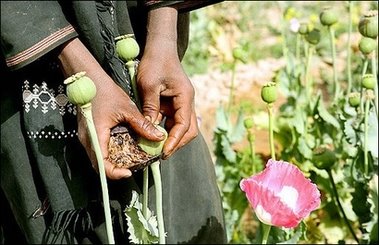
Opium in the Panjwayi District. There is a fairly large opium crop grown in this district but it is not nearly as large as the crop grown in Helmand Province next door.


*****

*****
Kabul: Suicide car bomb attack on British convoy on the Kabul-Jalalabad Road killed 1 British soldier and seriously wounded 1 more. 2 other Coalition troops were killed. 2 Afghans were killed and 7 more were wounded.
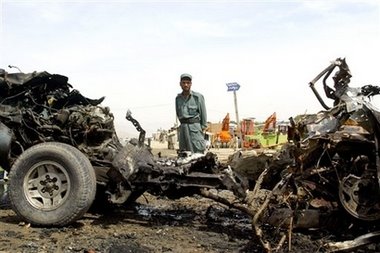
The remains of the suicide car bomb attack on British troops in Kabul that killed 1 British soldier Monday, September 4.


*****

Parwan Province: Guerrillas killed 2 policemen here. Policemen and senior officials have been killed here every day for the past three days. This area north or Kabul has never been hostile and it is hard to understand what is going on here.


Sunday, August 3

*****
Panjwayi District, Kandahar Province: Operation Medusa, an effort to drive the Taliban from the District, continued for the second day. 4 Canadian soldiers were killed and 7 more were wounded in very heavy fighting here. Warrant Officer Richard Francis Nolan, Warrant Officer Frank Robert Mellish and 2 other soldiers were killed in the fighting. There are further details available.
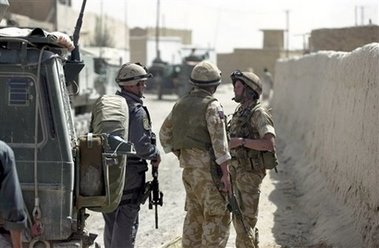
Coalition forces in Kandahar on Sunday, August 3, during Operation Medusa.


*****

Kabul Airport, 12:30 PM:
Mortar attack on the Kabul Airport. The Bulgarians just took charge of the airport at the end of July. There were no casualties in the attack.


Saturday, August 2

*****
Panjwayi District, Kandahar Province, 4 PM: A British RAF Nimrod MR2 reconnaissance plane supporting Operation Medusa crashed here, 12 miles west of Kandahar, near Kharot, in an operation intended to drive the Taliban out of this district, killing 14 British servicemen on board, in the worst loss of life for the Coalition in the South.

NATO said that the plane crashed due to mechanical difficulties, but the Taliban claimed to have shot it down with a Stinger missile. The Taliban are known to lie and take credit for downing aircraft that go down due to mechanical failure.

The following RAF personnel were killed in the crash: Flt Lt. Steven Johnson, Flt Lt. Leigh Anthony Mitchelmore, Flt. Lt. Gareth Rodney Nicholas, Flt. Lt. Allan James Squires, Flt. Lt. Steven Swarbrick, Flight Sgt. Gary Wayne Andrews, Flight Sgt Stephen Beattie, Flight Sgt. Gerard Martin Bell and Flight Sgt Adrian Davies, Sgt Benjamin James Knight, Sgt John Joseph Langton and Sgt Gary Paul Quilliam.

In addition, a British soldier, Lance Corporal Oliver Simon Dicketts, and a British Royal Marine, Joseph David Windall, were also killed.
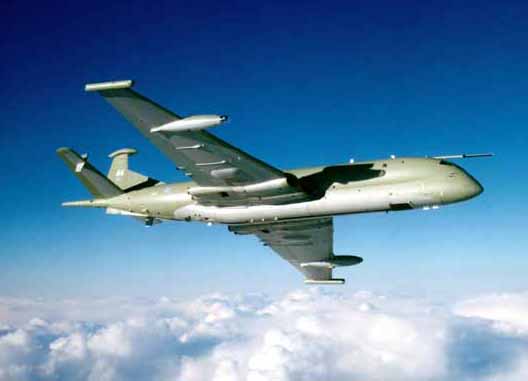
A photo of the impressive RAF Nimrod MR2 Reconnaissance plane from the British Ministry of Defense web page. This is the plane that went down on Saturday, August 2, killing all 14 British servicemen on board in one of the worst single incidents of the war for the Coalition.


*****

****
Bati Kot District, Nangarhar Province: Suicide car bomb attack on a US convoy here damaged a US vehicle but did not cause any US casualties. In addition to the bomber, 1 Afghan was killed and 2 more were wounded in the attack. The Bati Kot District is 23 miles southeast of Jalalabad, the capital of Nangarhar.
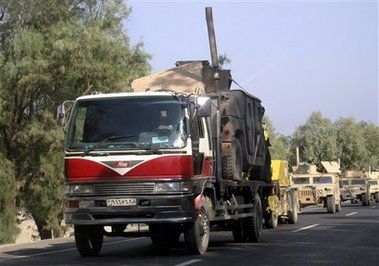
A damaged US military vehicle being towed after a suicide car bomb attack in the Bari Kot District of Nangarhar Province on Saturday, August 2. Note that this part of Afghanistan is wetter and has more trees than the much drier areas to the south.


*****


Friday, September 1

Ghazni Province, AM:
A district governor, Habibullah Khan, and his entourage of 6 bodyguards, was ambushed by the Taliban as they were on their way to the capital city of Ghazni. Khan was killed in the attack but there were differing reports on whether or not his bodyguards were killed or wounded. The Taliban said they killed all of the bodyguards but the government said that they were only wounded.

Helmand Province, 4 PM: The Taliban attacked British forces here, killing 1 British soldier, Army Ranger Anare Draiva, and seriously wounding 1 more. There were no further details on the attack, including where in Helmand it occurred. Draiva was a Fijian.


Thursday, August 31

*****
Ghazni Province: A Dutch F-16 flying at a very high altitude went down, killing the pilot. The plane apparently went down due to mechanical problems, as it was flying too high to be shot down.
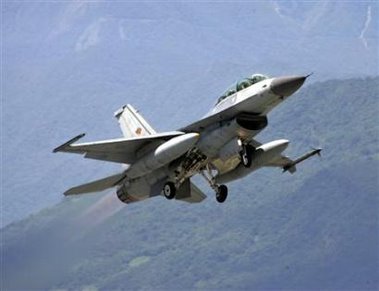
Photo of an F-16 in action. A Dutch F-16 went down due to mechanical problems over Ghazni Province on Thursday, August 31, killing the pilot.


*****

Helmand Province: More "foreign fighters" are reportedly present in the Taliban fighters that the British are fighting in red-hot Helmand Province, according to an article in the Gulf Times. Previously, most of the fighters were local Afghans from the South of the country. The article did not state what country the fighters were coming from, but there was a suggestion that they were Pakistanis.

*****
Kabul: The Afghan government is considering reinstating the morality police of the Taliban, but they will not have whips. Instead, they will supposedly gently counsel Afghans to please engage in proper Muslim behavior. The problem is the disconnect between the Westernized society of Kabul and the very conservative remainder of Afghanistan. Beer is sold openly in Kabul, even to local Afghans.

There are number of brothels with Chinese and East European women. They mostly cater to Westerners, but they also have some Afghan clients. Cinemas showing risque movies from India with women in bikinis, tame by Western standards, are filled with Afghan men recording scenes on their cell phones. Many women are walking around without a headscarf, much less a burka.

All of this hedonism is producing a backlash in favor of the morality police and new laws. As is typical in Islamic societies, curiously, the very people indulging in the vices are amongst those calling for the crackdown. Among the new laws being considered are laws forbidding the sale of alcohol and censoring sexy movies.
*****


Wednesday, August 30

Mehman Qala, Andar District, Ghazni Province:
The Taliban raided a police checkpoint here in this Taliban-controlled province and opened fire on the police. The police returned fire, killing 2 Taliban and wounding 3 more. Ghazni has been getting increasingly unstable in recent months. Mehman Qala is about 3 miles north of the capital city of Miri.


Tuesday, August 29

Nuristan Province:
Police found the body of Mohammad Yunus, a former commander in Gulbuddin Hekmatyar's Hezb-i-Islami during the war against the Soviet Union. Yunus had recently established a militia to support Karzai's government. He was captured with his two bodyguards in Nuristan by unknown persons who were probably insurgents on August 20.


Monday, August 28

*****
An obscure Islamist group, the Council of the Secret Army (CSA), announced that it was joining forces with Gulbuddin Hekmatyar's Hezb-i-Islami. In 2004, Hekmatyar announced that he was recruiting fighters under the banner of the Secret Army of the Mujahedin to fight the foreign forces in Afghanistan. That same organization threatened to kill candidates in the Afghan elections in 2005.

In July of this year, a group called the Secret Army of the Taliban claimed responsibility for an explosion at a Bangladeshi NGO in northern Afghanistan. Some feel that the CSA are neo-Taliban, but if so, why did they not sign on with the Taliban instead of Hekmatyar? Hekmatyar, while a radical Islamist, is generally considered to be not as extreme as the Taliban.

He is mostly concerned with throwing the foreign forces out of Afghanistan. His origins are in the Afghan Muslim Brotherhood back in the 1960's. His base is mostly in the east around Nangarhar, Kunar and Nuristan.

Hekmatyar was one of the worst warlords in the intertribal fighting that followed the defeat of the pro-Soviet regime. He played a large role in the destruction of Kabul in mid-1990's with indiscriminate shelling of the city.
*****

****
Qarya-i-Qol, Qarabagh District, Ghazni Province: 2 Afghan soldiers were captured by the Taliban in this increasingly unstable district. They were taken somewhere and then the Taliban used one of the soldiers' cell phones to call his base. As another soldier listened, the Taliban tortured to death the 2 soldiers.

This is really creepy, like something out of a horror movie. The article states that the crime occurred in a place called the Crirgia Gala Valley. This is probably a reference to the town of Qarya-i-Qol (map here) and a valley nearby.
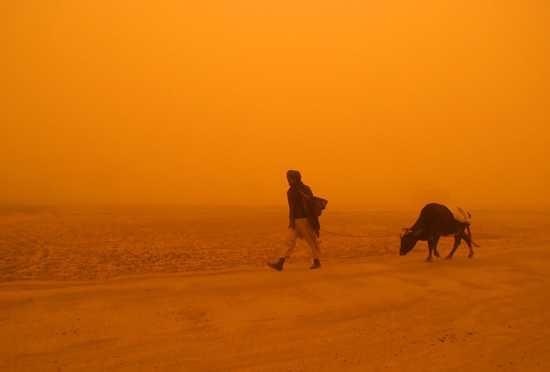
A man and an animal walk during a sandstorm in Ghazni Province in an undated picture. This creepy photograph goes nicely with the creepy war crime story above that took place in Ghazni Province.

****

Thursday, August 31, 2006

Afghanistan Wrapup for August 30, 2006

Updated January 28, 2008:

Tuesday, August 29

Near Kandahar:
Suicide car bomb attack on a Canadian-Afghan military convoy did not cause any Canadian casualties, but killed the bomber and a civilian nearby and wounded an Afghan soldier. The attack occurred on the road linking Kandahar with the Kandahar Airport.

Gereshk District, Helmand Province: Roadside bomb attack on a police patrol here killed killed two policemen. Gereshk has been hostile for years now.

East Kabul: Roadside bomb attack on a NATO vehicle in East Kabul missed the target and no one was hurt. Things are getting pretty bad when the guerrillas are setting off roadside bombs right inside Kabul proper.

****
Cahar Cineh District, Uruzgan Province: 60 Taliban attacked a Coalition force with RPG's and machine guns here, sparking a savage battle. 18 Taliban were killed and there were no Coalition casualties. There is no such district as the Cahar Cineh District in Uruzgan.

There is a town called Cineh in the very hostile Deh Rawood District, which is about 7 miles west of the very hostile district capital of Deh Rawood and about 6 1/2 miles east of the Helmand border. For unknown reasons, most of the Taliban activity in Uruzgan is in the south.
*****

****
Bamiyan Province: Two New Zealand soldiers were wounded in a vehicle accident here when a part of the road they were on gave way, causing their vehicle to roll down a 60-foot slope.

Bamiyan is populated by a persecuted, Shia Asian ethnic group called the Hazara. The Hazara are pro-Coalition and are not involved in any armed attacks at all. The Taliban killed many Hazara and engaged in a vicious campaign against them that had genocidal overtones.

Much of Bamiyan, except the Bamiyan Valley, is is a high-altitude, fairly barren province that is one of the less desirable places to live in Afghanistan, mostly because it is inhospitable rather than unproductive. It is cold and dry, with very long, very cold winters and short, hot summers. Most of the region only gets about 5 inches of rain a year. The amount of snowfall is not known, but the region reportedly gets heavy snowstorms.

The Hazara have been driven here from more productive parts of the country, where they scratch out a living, mostly from herding but also some from agriculture. In Kabul, the Hazara are typically seen employed in menial jobs that pay low wages.

The Hazara have been persecuted by a number of Pashtun-dominated Afghan governments for centuries for a variety of reasons. Discrimination against the Hazara is still common in Afghanistan. The Hazara were one the first Afghan groups to rebel against the Communist PDPA government that seized power in the Saur Revolution coup of April 1978.

In Winter 1979, the whole Hazarajat (the region where the Hazara live) was in open armed rebellion against the state. The Hazara saw this as their chance to get independence for over 100 years of oppressive rule by the Pashtuns running the Afghan state. Syed Bashtiri headed a council of traditional Hazara leaders that led the revolt.

After a while, Iranian-supported parties such as the Sipah-e- Pasdaran took control over the fighting. After the overthrow of the Communist regime in 1992, Afghanistan descended into Hellish civil war.

The Hazara were concentrated in a group called Hezb-i-Wahdat, which was the main Shia mujahedin group that fought the Communists. Later, this group fought for Shia interests during the Civil War. Most of the fighters in Hezb-i-Wahdat were Hazara.

Shah Massoud, the Tajik commander and leader of the Northern Alliance much loved by the Western media for opposing the Taliban, shelled Hazara districts of Kabul in 1995 and then overran them and ethnically cleansed many Hazara from these areas.

In 1993, over 1000 Hazara were tortured and murdered in Kabul by forces of former President Rabbani, Massoud and Adbul Rasaf Sayyaf, leader of a Salafist-Wahhabi group called Ittihad-e-Islami concentrated in Laghman and Kunar.

It is curious the heroes that the West chooses.

The origins of the Hazara are obscure. They appear, like most people in the region, to be a combination of Caucasian and Asian. In the case of the Hazara, they are mostly Asian with some Caucasian admixture. 25% of Hazara carry genes showing that they are related to Genghis Khan, who invaded the area in the 1100's and whose soldiers stayed on after the fall of Khan's empire in the 1200's.

This means that the Hazara are 25% Mongolian. Nevertheless, the Hazara are not purely related to Genghis Khan, as historical chronicles indicate that an Asian people apparently ancestral to the Hazara fought very hard against the Khan's Mongol invaders.

Some say that the Hazara were originally Koshanis, part of the Kushan Empire, a large, mostly Buddhist and to a lesser extent Zoroastrian and Shaivist (a branch of Hinduism that worships Shiva as a God) empire that stretched from India through Pakistan to Afghanistan and Tajikistan. This empire lasted from 1-250. The Koshanis built the Bamiyan Buddhas that the Taliban destroyed.

The Koshanis spoke an Indo-European language possibly related to Tocharian, one of the most ancient and divergent Indo-European tongues. They were a mostly-Asian people from the Tarim Basin and the Gansu region of China.

The Tarim Basin is dominated by the Taklimankan Desert and is now part of the Uighur Autonomous Region. The best analysis of the origins of the Hazara is that they are a mostly Uighur-Turkish people who have some Mongolian genes left over from Genghis Khan's invasion.

They are mostly Shia (generally Imami Shia) but some in the east are Sunnis. A few Hazara Ismaili Shia live in Bamiyan. They speak a language called Hazaragi, which is actually a language related to Persian, not a dialect of Persian as is often stated. It is interesting in that it contains some Mongolian and Turkish vocabulary.

8.5 million of the 9 million Hazaras in the world live in Afghanistan. Hazaras make up 28% of the population of the country but have long had little representation in the Afghan government.
****

*****
Farah Province: The Taliban fired on a vehicle carrying Turkish road workers here as they traveled between Kandahar and Herat, killing 1 and capturing 1 more. Farah has seen an increasing number of attacks for some time now.

The theory is that the Taliban are moving north from Helmand Province due to Coalition operations into Farah. On the other hand, perhaps the Farah insurgency is indigenous. Another Turk working for a security firm was abducted in the same attack.
******

*****
Between Kabul and Pul-i-Charki: Another Turkish road worker, Riza Özsimsek, was killed while working on a highway for the construction company Jeo-Son. He was found dead in the garage of the construction company. Many foreign workers are helping to rebuild Afghanistan's roads.

The Taliban have warned all foreign workers not to work on these roads or any other reconstruction projects seen to benefit the Karzai regime. If workers do not heed the group's warnings, the Taliban says they will be targeted. Pul-i-Charki is on the eastern outskirts of Kabul. This shows that the Taliban are present right in Kabul proper.
*****

****
Zhari District, Kandahar Province: Another Canadian soldier has been injured by a mortar attack in Afghanistan. The attack came about 6 p.m. local time yesterday, at Zhari District Center, west of the city of Kandahar.

NATO officials say several mortar rounds struck the Canadian forward operating base, injuring one Canadian soldier and one Afghan security force member. It's the second time in as many days that a Canadian has been injured by mortars at the base, and the third attack in the last 36 hours.

Early Sunday, a Canadian soldier and six Afghans were injured by mortar rounds. Repeated attempts to locate the so-called Zhari District (which apparently does not exist) or any town called Zhari have been unsuccessful.
*****

Helmand Province: Mine attack on a police vehicle killed two policemen.

Zabul Province: Roadside bomb attack on a carload of Afghan civilians who were friends of the governor of Kandahar Province as they traveled from here to Kandahar to visit the governor wounded 4 of the men.


Monday, August 28

*****
Lashkar Gah, Helmand Province : In a devastating attack here, a suicide bomber blew himself up in the bazaar here, killing 21 people and wounding 43 more The target, other than just sheer terrorism, was not known.

The Taliban claimed responsibility for the attack and said the target was the former Lashkar Gah police chief, who was attacked because he served under the Communist regime in the 1980's. The former chief and his son were both killed in the attack, but many innocent civilians were also killed and wounded.
*****


Sunday, August 27

Helmand Province, 5 AM:
Fighting here killed 1 British soldier and wounded a NATO soldier (nationality unknown). No details of the attack were given.

Zhari District, Kandahar Province, Early: Mortar attack on the Zhari District Center base a NATO base here wounded 1 Canadian soldier and 6 Afghans.

Qarabagh District, Ghazni Province, Evening: The Taliban kidnapped a local intelligence official who was also the son of the Qarabagh District Chief. He was on his way home to the neighboring Andar district. The Andar District is completely controlled by the Taliban. The capital, Qarabagh, is located about 33 1/2 miles southwest of the capital of Ghazni, Ghazni City.


Saturday, August 26

Helmand Province:
British aircraft bombed seven vehicles in a convoy here carrying guerrillas who were said to moving towards Coalition forces to carry out an attack against them. About seven guerrillas were said to be killed in the attack.

Zhari District, Kandahar Province: Canadian troops mistakenly opened fire on a truck carrying undercover Afghan police here, killing 1 and wounding 4 more of them. Canadian police had used hand signals and warning shots to warn the vehicle but these signals had been ignored and drew an "aggressive response". Troops at the checkpoint fired on the vehicle and the police fired back.

Kandahar Province: About 40 minutes after the above incident, 2 Afghans on a motorcycle approached the same checkpoint. Once again, warning shots and hand signals were ignored and troops opened fire, wounding 1 man, who turned out to be a civilian.

*****
Musa Qala, Helmand Province, Late: 40 Taliban fighters stormed the headquarters of Musa Qala district, setting off a three-hour gunfight that killed 10 Taliban. Musa Qala is one of the most red-hot hostile areas in all Afghanistan.


The Coalition base in the terribly desolate and very hostile terrain of Musa Qala, Helmand Province


*****


Friday, August 25

Khogyani District, Nangarhar Province:
Roadside bomb attack on a US vehicle in Khogyani district of eastern Nangarhar province wounded 4 US soldiers. This district has seen some nasty roadside bomb attacks in the past. The Khogyani District is a deeply conservative district. Tora Bora is located in the high peaks in the southern part of the district.


Boys in a new school built by a German aid agency in the Khogyani District of Nangarhar Province. There is a serious need for schools in this district.


A new girls school built by a German aid agency in the Khogyani District. Girls schools are in very short supply in this deeply conservative district. Despite fears from aid agencies, local government has cooperated in the building of girls' schools.


Zabul Province: Roadside bomb attack on an Afghan patrol here wounded four Afghan soldiers.

*****
Copenhagen: The Danish military leadership has withdrawn all of its troops from the Musa Qala base in Helmand Province following massive attacks by Afghan rebels. A number of Danish soldiers were wounded - two seriously and several others slightly - in almost daily attacks since they occupied the base on July 21, the newspaper reported.

This is a serious blow for the NATO deployment in Helmand. The area around Helmand is apparently still one of the most hostile areas in all Afghanistan and little progress seems to be being made to put a dent in this savage insurgency.
*****

****
Argandab District, Zabul Province: Afghan police battled the Taliban here, and 6 Taliban were killed and 12 more were wounded when the Taliban attacked the Argandab District chief’s compound. 1 policemen was also wounded in the fighting. Most of the districts in Zabul are probably controlled by the Taliban right now.


Children in a mosque school in the city of Argandab in Zabul Province.


This is a large district stretching through the heart of this seriously hostile province. The capital, Argandab, where this attack probably took place, is 32 miles north of Qalat, the capital of Zabul.


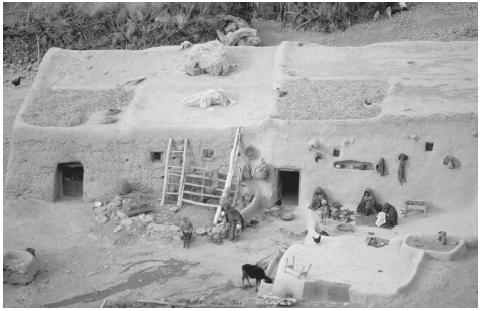
A typical Afghan mud-brick home in Argandab.


*****

*****
Eastern Afghanistan: Heavy fighting in an unknown location here killed 2 French Special Forces soldiers and wounded 2 more. I did not know that the French were operating anywhere in Eastern Afghanistan. I would guess that possibly they are operating up around Kunar and Nuristan but I am not sure.

The dead included an Air Force Airman First Class and a Navy Senior Chief Petty Officer. Two other air force non-commissioned officers were wounded in the operation. No names of the casualties were released.
*****

Wednesday, August 30, 2006

Who Were the Real Terrorists in Kielce 1946?

Updated February 1, 2008:

This blog presents another essay by the mysterious Eastern Orthodox expatriate US academic Stojgniev O’Donnell (a pseudonym). This blog differs with O'Donnell in a number of areas, but we agree with him in others.

I have published a number of O'Donnell's essays, which I receive through an intermediary as he does not deal directly with any US-based media. Unfortunately, in this essay he moves away from critical-Semitism (which we promote here) into the bigoted terrain of anti-Semitism. Critical-Semitism is humanistic, truthful and rational and anti-Semitism is the opposite of all three.

This blog strongly rejects the Jewish propaganda line that all criticism of Jews, their religion or their state is anti-Semitism, or that anti-Semitism is some bizarre unfathomable evil that occurs for no reason whatsoever.

I think maybe O'Donnell was angry when he wrote it. I strongly suggest that authors let sit pieces that they write when they were angry, and come back to them later when they are in a calm frame of mind and edit them accordingly. This is what we do here at this blog, when we remember to.

Still, because the history of Jews and Poles has been so tragic, it is useful to publish the Polish side of the affair in an effort to try to understand the roots of the problem.

This essay deals with a pogrom of Jews in Kielce, Poland, in 1946, after World War 2 was over, from a Polish nationalist point of view. Although I have not read it, Jan T. Gross'
Fear - Anti-Semitism After Auschwitz is supposed to be an excellent work that deals comprehensively with the terrible Kielce pogrom.

Out of a pre-war Jewish population in Kielce of 25,000, only about 200 Kielce Jews survived the war. The surviving Jews returned from the forests and camps and found that Poles had stolen their homes. This was the setting in which the famous pogrom took place.

It is fascinating how Jewish Zionists can rage beet-red about "Poles stealing the homes and land of Jews", while being oblivious to the nightmarish Jewish state occupying Palestine, which has stolen every inch of land it illegally claims.

Although only 39 Jews were killed in the pogrom (relatively few compared to other pogroms), the Kielce Pogrom had great significance for Polish history. After WW2 ended, many Jews had hopes of continuing to live in Poland. For many of them, Kielce ended all of that.

As Stephen Pollard notes, Kielce convinced many of them of the need for a Jewish state (this is actually a dubious assumption on the part of Zionist Pollard). Debate about the Kielce Pogrom and the Polish role in it has continued in recent years.

A Polish commission in 2000 concluded that a mob of local Poles spontaneously attacked and killed the Kielce Jews as a result of "unfortunate coincidences of an historical nature", and dismissed a conspiracy theory that the pogrom was instituted by the Soviet Union.

Last month, on July 6, a memorial to the victims of the pogrom was laid in Kielce on the 60th anniversary of the pogrom. The Polish President's office read a statement at the ceremony describing the pogrom as "a great shame and tragedy for the Jews and Poles". This blog concurs completely in that sentiment.

The essay below deals with an article by Adam Michnik, the Jewish editor or Poland's largest newspaper. This article also sheds light on current Polish affairs and indicates that, alas, all is still not well between the Poles and the Jews.

The piece makes some pointed critiques, which are commonly made, of secular, liberal Jews in the media using that forum to aggressively push a particular type of Jewish tribal agenda onto a non-Jewish population.

Note the anti-Russian and anti-Soviet sentiment in O'Donnell's piece, typical of Polish religious nationalism.

Suffice to say that O'Donnell's views are pretty typical of Slavic Eastern Orthodox Christians in Poland, Serbia, Romania, Bulgaria, Belarus, Ukraine and Russia and to a much lesser extent among Orthodox Christians in Greece and the Arab World.

Socially conservative yet anti-imperialist and to some extent anti-Western, these Orthodox have also had a tempestuous relationship with the Jews.

These difficulties, and the reasons behind them, have of course been shrouded in fog by the Politically Correct theory of anti-Semitism, which holds that anti-Semitism is a form of mental illness, is not understandable by anyone but a psychiatrist or a prison warden, and occurs for no known reason at all.

I call this the mystification of anti-Semitism, and while it serves ego-defensive purposes for the Jews and philo-Semites who have contrived this nonsense, it surely sheds little light on anti-Semitism.

Furthermore, by promoting Zionism and the Jewish state (one of the worst mistakes the Jews have made in recent years) this mystification serves more nefarious ends. For it is Zionist dogma, elucidated by Theodore Herzl, the founder of Zionism himself, that the Gentiles will always hate the Jews, everywhere the Jews are, for eternity.

Such it has been, such it is, such it will be.

Hence the need for the armed gangster-state ghetto (It even has a wall around it!) called Israel.

A further elaboration is that worldwide, an eternal epidemic of anti-Semitism has occurred, continues to occur, and most importantly, will always occur, ever since the Jews appeared on Earth, for no intelligible reason whatsoever other than merely a manifestation of evil.

The insidious and disgusting sentiments working here? All Gentiles are anti-Semites. Anti-Semitism is incomprehensible other than as an infection of evil.

Putting the two together, we realize that many ultranationalist Jews actually believe that all Gentiles are evil people. Hence, apparently on some level, they hate us (Israel Shahak said a majority of Israelis had a deep hatred of all Gentiles). And they accuse us of being "haters".

In truth, Jewish suffering has not been particularly unique. Throughout most of the history of feudal Europe, Christian serfs would have gladly traded places with Jews. Certainly there were pogroms and other forms of prejudice and racist hatred, but serfdom for the serfs themselves was one centuries-long pogrom.

If one reviews the history of any ethnic group, tribe or nation, one will find that they have often been in conflict, often armed conflict, with various neighbors for various reasons. Wars have been ongoing, and many members of the tribe or nation were killed. The land was often overrun by invaders, often repeatedly, much of their land stolen, and many of their people killed.

Painful as it may sound, the history of the Jews (until the 1940's anyway) is probably not that much more painful that that of many tribes and nations. Even the extermination attempt in the 1940's was not unique, sadly, as there have been many attempts to exterminate various ethnic groups.

The Tutsis lost possibly 70% of their population in the genocide in 1994. By any accounting, that is more than the 1/3 of Jews lost in the Shoah. One-third of the population of East Timor was killed after Indonesia invaded, equivalent to the Shoah as a percentage. Many American Indian tribes have been wiped clean off the map altogether.

I am not an expert on Slavic Orthodox Christian anti-Semitism but in Poland, in general, Catholic anti-Semitism was religiously-based, or more accurately based on confessionalism (religious bigotry without religious belief). In a nutshell, the Poles wanted Jews to convert to Catholicism and intermarry with Poles. The Jews would do neither, and hence anti-Semitism ensued.

The Chmielnicki Rebellion in the Ukraine from 1648-1654, during which about 20,000 Jews and 100,000 noblemen were killed, has achieved permanent victimology status amongst Jews as merely an outbreak of murderous anti-Semitism, and nothing else.

That it was, but many Jews had formed a middle class that allied itself with the brutal feudal lords. The Jews were often the only face of feudal rule that the serfs ever saw.

The rebellion was probably mostly just a peasant rebellion of serfs against the feudal lords and their allies. Many people were killed on all sides.

Chmielnicki, who led the rebellion, actually implored the Jewish poor to join the fight against their brethren who were allied with the feudal classes. The Jewish poor refused. To this day, Chmielnicki is seen as a hero in the Ukraine, while Jews regard him as some kind of Hitler and see his fame as emblematic of anti-Semitism in the region.

Chmielnicki is probably more akin to, say, Tupac Amaru, who led the Inca against the Spaniards in the late 1700's, or Mao Zedong, or Ho Chi Minh, or Desallines in Haiti in 1804, or other leaders of peasant rebellions. It is useful to note that peasant rebellions, whether involving Jews or non-Jews, are typically bloody affairs.

For example, in 1804, in the Haitian Slave Revolt, the Haitian slaves rose up against French slave-holding families in Haiti and killed most of the 25,000 population of them. This blog regards that wild massacre, as, in general, a great day for humanity (though the children of the slaveowners could have been spared).

Another interesting aspect of the Chmielnicki Rebellion is that the Jews look at the rebellion and the 1600's in which it occurred, as one of, as noted above, an insane outbreak of murderous anti-Semitism, and little else. From the Jewish point of view, this was the century in which people went nuts in the Ukraine and slaughtered Jews for no reason. Not much else happened of consequence in the region at that time.

Never mind that the Jews killed were the public face of inhuman feudal brutality, as noted above. We need also to note that during this same period, Poland was wracked another terrible outbreak of anti-Semitism, but this occurred in the context of general chaos, wild warfare and multiple invasions of Poland by various foreign powers.

During the period in which Jews narcissistically mourn their own losses as the only salient tragedy of the time, an incredible 1/3 of the population of Poland (the Polish-Lithuanian Commonwealth) was exterminated. This is a population loss equivalent to the Jewish Shoah. So, while Jews were definitely being killed in Poland during this time, the Poles themselves were also being slaughtered like flies.

Whether Jews were being killed to a greater extent than Poles is open to debate. The critical point here is that this was not so much only another wild outbreak of incomprehensible Nazi-like slaughter of Jews (the myopic Jewish view) but instead, it was simply a period of mass slaughter of the population at large by various actors for various reasons.

The number of dead in the Chmielnicki Rebellion has also been exaggerated, which has been a general tendency of Ashkenazi Jews who have cultivated a victimhood epic. Exaggeration of one's own losses, and the resulting embrace of victimhood, is probably a general human tendency and not limited to Jews.

Jewish sources originally said that 2.4 to 3.3 million Jews were killed during Chmielnicki, and modern-day Jewish sources put the figure at 500,000. An Israeli historian has produced a more accurate figure of about 19,000 Jewish dead out of a population of 40,000. Nobles suffered much more, as they were virtually exterminated from the Ukraine - scarcely one survived.

Nevertheless, one gets the impression that Jewish activists look at Poland in the 1600's and see only dead Jews and no other corpses.

A useful book that deals peripherally with Polish-Jewish and Ukrainian-Jewish relations is Primo Levi's " If Not Now, When?" (review here) about a group of armed Jewish anti-Nazi partisans operating behind enemy lines in Belarus, Ukraine, Poland and Germany in World War 2.

They meet up at one point with a group of Polish resistance fighters. The Jews air their grievances about Polish treatment of Jews to the Poles, who retort with a history of equally lamentable treatment of Poles at the hands of all sorts of invaders and local abusers.

The Jews end up concluding that the Poles have been just as abused as the Jews have, but in their twisted way, many of the Poles took out their rage on the local Jews instead of on the real abusers. Both sides leave with a refreshed understanding of each other. By the way, I enjoyed Levi's book and recommend it.

With that background, we can move on to the piece. As usual, my comments, if any, will appear in bold brackets:


I am no expert on the history of the events that took place in Kielce, Poland in July 1946 and resulted in the death of a group of Jews. And I have no intention of becoming an expert, for several reasons. First of all, I am convinced that the version of the Kielce events which is promoted by Jews as historical reality is, in fact, a clever distortion of the truth.

[RL: I do not think that this is completely accurate, though the standard Jewish line includes various inaccuracies.

The aberrations include that 80, or 50, or however many, Jews were killed - no, it was 39 - and that the Polish army and police and gleefully joined in the killing - in fact, the
Polish army fought off the mob for some time, and took the wounded to the hospital, although some other soldiers joined in the pogrom.]

The Jewish version of the notorious “pogrom” has been crafted by Jews because of the propaganda value of its symbolism. Kielce is one of those shticks with which Jews love to thrash Poles. (Always the Jews glorify their distinctiveness. They can’t speak German unless it becomes “Yiddish.” They can’t get their butts kicked unless it’s a racist “pogrom”).

[RL: For the record, Yiddish and German are distinctive languages. Yiddish is not even a dialect of German; it is a separate language altogether. Yiddish is actually a sort of a German-Slavic creole with many Hebrew words mixed in.]

Life is too short to be distracted by what happened in Kielce. Some Jews were murdered by Poles. A Polish boy mysteriously disappeared for awhile (though he turned up unharmed after the violence) and there were rumors of ritual murder.

Substantial evidence suggests that the Kielce “pogrom” was engineered by Soviets in Poland, who used the incident to slander postwar Poland in the international press, while at the same time shoring up and legitimizing the unpopular Soviet occupation, which was bitterly opposed by the vast majority of the Polish population.

[RL: This view is quite popular in Poland, especially with Polish nationalists. A major Polish commission reviewed all evidence about this Soviet conspiracy theory and rejected it out of hand as unproven. There are many problems with the theory.

The main one is that there is little, if any, hard evidence supporting it, only a cui bono theory that suggests that the Soviet Union could have benefited from it.

Another mark against this theory is that, despite the blatherings of Jewish ultranationalists, the Soviet Union was not anti-Semitic at the time or prior, and was not until the disappointing "rootless cosmopolitan" campaign of 1948.]


The reason I raise this topic is because of an interesting article on Kielce by Adam Michnik, the notorious Jewish “dissident” and contemporary media magnate. Michnik’s article appeared in his newspaper Gazeta Wyborcza: “Pogram Kielecki: Dwa rachunki sumienia” (3-4 July 2006, pp. 12, 13, 14 and 10-11 July 2006, pp. 22, 23, 24).

How did Michnik (real name: Adam Szechter) go from poor dissident to publisher of the most powerful daily in postcommunist Poland? I leave it to the reader to draw his own conclusion.

Michnik’s newspaper is a source of rabid anti-Polishness; anti-Christianity; political correctness; strident support of homosexuality, love parades, and social deviance; and propaganda for all of contemporary America’s and Western Europe’s wickedest nonsense on relativism and multiculti.

Michnik occasionally and strategically writes with sympathy about the Catholic Church, which enjoys the backing of the great majority of the Polish population.

[RL: Jewish hostility towards Christianity, to one degree or another, is often seen in even very assimilated US Jews, and is most pointed towards Catholicism, and not so much towards Protestantism. Jews have long memories, and Christian anti-Semitism in Europe was, for the vast majority of its history, Catholic.

We see this Catholic anti-Semitism in Latin America also. Typically, it took the form of a complaint that "Jews killed Jesus". Hence the furor when Mel Gibson, a deeply conservative Catholic, made the movie,"The Passion". Protestants in general have never cared much about Jews one way or the other, though lately many Protestant fundamentalists have become passionate Zionists.]


Michnik’s people will pen some insignificant article on a minor religious celebration, illustrated perhaps with a color photo, while in the same issue publishing a couple of deeply ideological articles which seek to compromise the Polish Church.

[RL: I confess it is beyond me why the secular, liberal, Westernizing Jews that tend to own media outlets so often play with fire in this way.

We have seen so many reports like this of Jewish ethnic activists in the media aggressively pushing a particular secular, liberal, Westernizing Jewish agenda onto a non-Jewish population that it cannot possibly anti-Semitic fantasy. However, to dislike Jews due to the activities of these "media Jews" is a mistake.

Many Jews, especially Orthodox Jews and particularly in Israel, are deeply conservative on social issues like multiculturalism, abortion, homosexuality, etc. They don't have much in common with the species of liberal "media Jew" described above.

Contrast the "media Jew" behavior with the mindset of Overseas Chinese, another minority very similar to Jews in that a tiny minority has often achieved huge economic power in a number of societies. Yet the Overseas Chinese tend to keep their heads down, assimilate, and not provoke the majority.

Pogroms have occurred against the Overseas Chinese, as they have against Jews, which suggests an economic basis for at least some of these violent uprisings. Yet perhaps Jews could learn a thing or two from the Overseas Chinese about how to not go out of one's way to provoke a majority population.]


In the article on Kielce, Michnik demonstrates his mastery of the Jewish art of propaganda.

He goes so far as to quote long passages about the Kielce “pogrom” written by Kielce Archbishop Czeslaw Kaczmarek and later delivered to the American ambassador in Warsaw (international Jewry at that time was agitating the West to defend Poland’s helpless, innocent Jews against racist Polish anti-Semitism).

Archbishop Kaczmarek eloquently explains the Poles’ suspicion of Jews:
Here after the large-scale murder of Jews committed by the German government in recent time in Poland, also in Kielce, there was no negative antagonism towards Jews and there was no anti-Semitism. Everyone sympathized with the Jews, even their most determined enemies. The Poles had saved many Jews, and without Polish aid, not a single Jew would have survived…Jews are unpopular, even hated, throughout Poland. There is no doubt about that.

Jews are hated by those Poles who belong to no political party, but also by those who belong to the ruling [communist] party…The origins of that antagonism are well known, but certainly they have no racial basis. Jews in Poland are the chief propagators of the communist system, which the Polish nation completely rejects….

Jews are everywhere in the government, in [Polish] institutions outside of Poland, in industry, in administrative offices, in the military, and everywhere in the most important, most influential positions. They control the nation’s press; they control all censorship today in Poland. They control the security apparatus and they are responsible for arrests (p. 13).
Something similar took place in other countries of the postwar Soviet bloc, as Jews in the name of communism and the brotherhood of nations with violence and terror “settled their accounts” with Christians.

[RL: The Cardinal's account is self-contradictory and problematic. As a Leftist, I don't necessarily have problems with Jews being Communists. It was true that there were many Jews among the Communists in Europe and the Soviet Union, especially in leadership roles.

These Jews were often outside of normative Jewish culture, religion and even mainstream Jewish identity. The notion that Jews in the Communist movement may have unfortunately used their power to attack their ancient enemies is a long-standing complaint of anti-Semites that deserves examination.

Certainly in the late 1920's and early 1930's in the Soviet Union, the abuse of the Christian religion was almost taken to the form of a fetish.

But note also that the institutional Christian churches in these Eastern Bloc states often opposed the Communist regimes. Jews as part of these regimes (and other government officials) consequently attacked these churches, as they attacked any other dissidents.

The notion that Jewish Communists were attacking dissidents not as Communists first, but as Jews first, is problematical and remains to be proven.

Many Communist Jews in the Eastern Bloc were probably trying to put into practice the noble Jewish tradition of being a "light unto nations". They may have been misguided, but they were probably sincere about wanting a better world.

Furthermore, many Eastern Bloc Jews probably saw Communism as a remedy for long-standing, often irrational anti-Semitism in the region. Note that in the 1960's, the Polish Communist government could no longer be considered Jewish-dominated, and even orchestrated a disgusting anti-Semitic campaign called the Polish 1968 Political Crisis.]


Here I should remind those foolish and naive Poles who worship America that the latter country does not allow any discussion or investigation of the Jews’ role in the communist terror.

[RL: This is simply not true at at all. There are no laws against it. However, there is a taboo associated with the subject. The Nazis made much of the association between Jews and Communism, so anyone equating Jews with Communism since then has been, partly properly, seen as treading in Nazi footsteps.]

According to the American academy, there was no collaboration between Jews and communists (I was recently told that point blank by one American professor).

[RL: Well, that is definitely a bald-faced lie.]

Michnik (along with a handful of other Jews) occasionally admits, however, that Jews truly were responsible for communist terror.

[It's not proper, as I have noted above, to ascribe all Eastern Bloc Communist repression to Jews. I believe that Jews were a minority even amongst, say, the Polish Communist Party.

In the early days, even in Poland, Communism was actually fairly popular, despite what O'Donnell implies, especially among working-class Poles.

Initially, conditions for workers and especially peasants were dramatically improved. Recall that Polish feudalism did not truly die until 1945, and it was the Communists who put the stake into feudalism's dying heart once and for all.

But the Polish Communists made a number of stupid mistakes, especially very heavy-handed repression, and by the mid-1950's or so, much of their popularity had evaporated.]


It is permissible in America for a Jew, but not for a non-Jew, to point out parallels between Jews and communists.

The main point of Michnik’s article is that the Catholic Church is to blame for the murder of innocent Jews in Kielce. (The ultimate implication, then, is that such an institution cannot be legitimate). Michnik quotes other Poles in the Catholic hierarchy and points out the moral failings of their political incorrectness.

And yet Michnik is so daring in his propaganda, so convinced of his skill at selling his “buy-one-get-one-free” illusion, that he is willing at times to argue the side of truth, i.e. the Polish point of view.

Archbishop Kaczmarek’s explanation, as quoted by Michnik, is a balanced, unemotional explanation of the Jewish role in the postwar communist terror in Poland. Reading Archbishop Kaczmarek’s text, one understands that, for historical reasons, Poles will never ever trust a Jew.

[RL: I think that is dubious. People have short memories, and Polish Communism is dead anyway.]

Michnik quotes some words delivered by a certain Rabbi Kahane in Kielce at the ceremonious burial of the Jewish victims of “Polish terror.” Michnik doesn’t provide background information on Kahane, but I have in my mind a definite, colorful snapshot of a spiteful rabbi puffed up with pride and venom.

Michnik, confident in his skill of disinformation, asks:
Polish reality, obligated at that moment, in 1946, to appeal publicly to the Jewish public for [Jews] to avoid cooperation with the communist regime imposed upon Poland, and especially with the security system, which was in fact for Poles a system of persecution? Was not the rabbi obligated to condemn the violation of human rights [in Poland], the persecution of people [from the non-communist, anti-Nazi underground], the excesses of censorship, the fake elections?
[RL: On the other hand, the only proper attitude of the Polish people towards Kielce itself is the statement of the Polish government at the July 7 ceremony discussed above - that it was a shame and a tragedy for both the Jews and the Poles.]

In attempting to appear impartial, Michnik raises some legitimate, essential questions. Why were Jews silent when Jewish communists were arresting, persecuting, and murdering innocent Christians?

[RL: We have dealt with the "Jewish Communists persecuted Christians" bit on this blog before. Recall that over 95% of Poles and 80% of Russians were at least nominal Christians, even during Communism. So any Communist repression was likely to target "Christians" simply because they were a majority of the population.

This essay of O'Donnell's seems to be an example of a Polish phenomenon called Zydokomuna and his complaints about persecution of Poles an example of Polonphobia. Both articles are excellent background for this post.]


The implication is this: Why was your Jewish Holocaust more important than ours?

[RL: It is interesting to note that 3 million non-Jewish Poles were killed in WW2. Poland lost an incredible 1/3 of its total population. That is 1/2 of the Jewish Shoah right there. 22 million Russians died in WW2. That is almost 4 times the number of deaths in the Shoah. Where are the "Russian Holocaust" Museums in America?]

We live in a time of struggle with Jews. The inclination of the Jew is to lead the world to Armageddon.

[RL: This is just rank anti-Semitic nonsense, but as far as the gangster, thuggish state of Israel goes, combined with its determined and often-fanatical opponents, there seems to be some truth in this. Which is another reason that state should have never been created.]

As I have noted before, a great virtue for the Christian is knowing when and how to ignore Jews.

[RL: I think it is important to note the ethnic biases which may be lurking in the propaganda of various ethnic groups. At that point, one can at least choose to ignore that propaganda or decide that it has an ethnic basis that may not be relevant to one's own group.]

One should never permit one’s life to be directed by Jews. Those non-Jews who spend their life in hatred of Jews are foolish, for their hatred is exactly what the Jew thrives upon – it confirms the Jew’s ethnocentrism.

[RL: Unfortunately, I conclude that this is true. Anti-Semitism indeed feeds Jewish ethnocentrism, which then feeds further anti-Semitism, which then...get it? Albert Einstein, who was Jewish himself, noted that Jews were determined to be at war with the whole world and then were surprised when the world did not react favorably to them.

Hostility towards outsiders, along with xenophobia and accompanying paranoia and a victimization fetish, go hand in hand with ethnocentrism. All ethnocentric groups (that means all humans, really) have the potential to display such tendencies. As a group becomes more ethnocentric, they will tend display these qualities more.

Jews, being perhaps the most ethnocentric tribe on Earth, would be expected to display xenophobia and accompanying paranoia along with a penchant to see themselves as eternal victims, in spades.

The solution, as noted by progressives from Marx on, is simply the assimilation of the Jews and the tearing down of all ghettos, physical and mental. Such is the road to liberation.]


I pity those Americans who have, in contempt, adopted the pejorative name “kike.” Never have I heard a non-Jew use that word in conversation. I have encountered “kike” only among Jews, who are hoping and dreaming that someone would legitimize their ethnocentricity by calling them a “kike.” The name “Jew” is enough. Jew says it all.

When a Jew mentions Kielce or Jebwabne, I simply smile and comment on the weather. I refuse to allow a Jew to dictate my thoughts. The point of this article is this: as the Jews become more powerful, they become more daring in their allusions.

[RL: As Kevin MacDonald notes, as Jews increase their power over non-Jews, anti-Semitism seems to increase. It is this, not some incomprehensible sickness of the soul, that holds the key to our understanding of much anti-Semitism.

The question then is, which way forward?

Is there something to be said for the Overseas Chinese tendency to keep one's head down and be discreet? Belligerence and overreach have caused the Jews untold heartache through time. Minorities prosper and live in peace at the whim of majorities, like it or not. Hence, pragmatism mandates reasonable discretion on the part of any minority.]


Adam Michnik and other Jews have come to believe that Poles are so simple-minded that they can be persuaded that Kielce is proof of the inherent evil of Polish society and the Polish Church. The reality is that Michnik, in particular, and Jews, in general, are deceiving charlatans. It is in their nature to deceive non-Jews.

[RL: Once again, more anti-Semitic blather, but let us note one thing. O'Donnell's rage, amply displayed in this piece, comes from something that is not well-known.

I was taught somehow, possibly through the standard pro-Jewish Holocaust line, that Polish Jews had heavily collaborated with the Nazis in killing Jews. Let us note that the degree of Polish collaboration with Nazis in Occupied Poland is controversial.

For some alternate views on the Nazi occupation of Poland that show that many Poles collaborated with the Germans and, more commonly, delightfully helped themselves to Jewish property after the Jews were gone, contradicting my general tone in this post, see here, here and here.

It is true that some Poles participated in 22 massacres of Jews during the Holocaust and a number of Poles collaborated with the Nazis. But one point of view is that, unlike Lithuania, Ukraine or other East European states, Polish enthusiasm for collaboration and pogroms during the Holocaust was less than other East European nations.

In fact, most Poles did not cooperate with the Nazi persecution of the Polish Jews at all, and most of the Jews who were killed in Poland were killed by Germans alone (with some exceptions such as the Jebwabne Pogrom).

In the cases where the Nazis had "local" collaborators, it is more accurate to describe them as the Polish Government in Exile did in the famous letter below, as "the dregs of Eastern Europe", rather than only Poles. In other words, Nazi collaborators in Poland came from a variety of East European nations.

There are more Poles listed than any other national group in the Righteous Among Nations Award given by Israel for those who helped to save Jews during WW2.

In Nazi-occupied Poland, hiding Jews was punished by the death penalty. Poland was the only Nazi-occupied country that formally instituted the death penalty for sheltering Jews. Nevertheless, as we noted above, more Poles saved Jews than any other national group.

The Polish government in exile was the first government to tell the world of the existence of concentration camps and the Nazi policy to exterminate the Jews (a copy of that famous document is here).

Anyone who insists, as one of my commenters did at the end of this piece, that the vast majority of Poles collaborated with the Nazi Final Solution, or that the Poles have always been some of the worst anti-Semites on Earth, needs to carefully read this remarkable 15-page historical document.

This document, describing the reality of life in Nazi-occupied Poland in stark, brutal terms, focuses on the plight of the Jews, and describes the Nazi destruction of Polish Jewry in rich, detailed terms. The document could have been written by the ADL or the Israeli government.

We should also note that the Polish government in exile was the only government that set up an organization specifically dedicated to saving the Jews of Poland - this organization was called Zegota.

When I first read O'Donnell's post here, I could not understand his anger and I thought that he was just degenerating into anti-Semitic irrationalism (as he does from time to time). But now that I have learned the reality of the dynamic between Poles and Jews in WW2, I am beginning to understand his anger.

Yes, a number of Poles collaborated and some even killed Jews themselves, but this occurred in most Nazi-occupied countries. But the vast majority of Poles refused to get involved, and a huge percentage of the population either joined or supported an often-suicidal Polish resistance.

The Polish resistance was one of the largest, most potent and accomplished of all of the resistance armies in the Nazi-occupied lands. The Polish resistance, with the support of millions of Poles, worked feverishly to save every Jew in Poland as part of their resistance project. They even organized an amazing resistance organization in the bowels of the Auschwitz itself.

A Pole, Witold Pilecki, was the only person who volunteered to be imprisoned at Auschwitz and the first person to organize a resistance organization there. Those few Jews who survived (a horrifying 90% were exterminated - 3 million in total out of 3.4 million, or 1/2 of the entire Shoah) survived only at the whim of their Polish neighbors who hid them.

The reality of the Polish-Jewish dynamic in Occupied Poland was, as elsewhere in Nazi-occupied lands, more complex than the sound bites the propagandists feed us. Some Poles collaborated but many more did not. Some Poles killed Jews, and many more worked night and day to save them and fight Nazism.

In that light, Jewish chauvinist propaganda depicting Poles as super-Nazi collaborators and the worst anti-Semites on Earth is not only erroneous but it is also disgusting and unfair. And this is the misguided agenda of Organized Jewry (exemplified here by Mr. Michnik).

This agenda needs to be condemned alongside Poland's historical anti-Semitism and the refusal of many Poles to take responsibility for Kielce. Kielce happened, 60 years ago, but it's all over now. It's time to put it to rest and move on towards Polish-Jewish healing instead of this endless, divisive pummeling of dead beasts.

In that context, Jewish obsession with Kielce and other Polish horrors seems misplaced. The latest philo-Semitic notion is that "the world was silent" after Kielce - that seems highly dubious to me.

Instead, Poles should be commended for refusing to collaborate in the Judaicide. Michnik's harping on aberrations like Kielce would not appear to be conducive to rebuilding Polish-Jewish relations.]

Tuesday, August 22, 2006

Katrina Death Toll Plummets to 1,723

Updated February 3, 2008:

As the 1-year anniversary of Hurricane Katrina looms, the death toll from the Hurricane has taken a serious drop, as Louisiana has apparently weeded out many of the out of state deaths in a short post-Hurricane period as not related to the Hurricane. As of August 2, the death toll has dropped from 1,836 to 1,723, a drop of 113 deaths.

Previously, Louisiana had listed 1,577 deaths as being due to the hurricane. That included 480 out of state deaths and 1,097 deaths in Louisiana. The out of state number has now been reduced to 346 deaths, a drop of 134 deaths. A graphic showing the out of state deaths by state is here.

The Louisiana total has increased to 1,118, an increase of 21 deaths. So, between May 18 and August 2, a period of 10 weeks, an additional 21 deaths were recorded in Louisiana itself, which is pretty amazing.

On August 1, only a month ago, another body, or more correctly a skeleton, was found after firefighters smashed down the door of a home filled with debris. Officials were alerted by a man who said his mother's body may still be in the home.

There are only 23 bodies that have not yet been identified. That is a reduction from 49 bodies on July 6 and shows excellent progress is being made in body identification.

The total for Louisiana has dropped to 1,464 deaths.

There are still 135 people missing from the storm. That number has not changed much in the past month or two. Although many missing continued to be found up until a few months ago, at this late date, I fear that many of the missing are probably dead. One wonders at what point the missing are simply assumed to be dead.

In a serious case of bureaucratic failure, the official missing list for Louisiana has not been updated since February 2, and still contains the names of 2,371 people. That list seriously needs to be updated.

I tried to call the Louisiana Department of Health and Hospitals to ask them about this situation, but the woman who answered the phone did not seem to be able to even understand my question. I understand that there are Americans who do not have very high IQ's, and that is not their fault. But must they be employed by state agencies to deal with the public?

At this point, I am giving up but some enterprising researcher really ought to follow up on this with a phone call to the the Department above and ask them when they are going to update their missing list, if ever.

Reportedly, over 99% of the Louisiana Hurricane Katrina missing persons cases were resolved in one way or another. However, I have received communications from persons working with the families of missing persons in Louisiana who claim that there are still 1000's of persons looking for missing loved ones from this storm.

We are going to continue to give Mississippi 238 deaths, until they can publish an official number, or list the dead, or do something responsible about this figure. There continue to be issues with the Mississippi death toll. For one fascinating example, see this weather blog here, in particular the comments by "squeak", Jeff Stang and "BenRMac":

"squeak's comments:
In the obits in the MS Press and Sun Herald, in the weeks after the storm, there were many older people who passed away in that time frame, and even though it was not on the day the hurricane hit, but after, I assumed that a number of these deaths were indirectly related to the hurricane. It seems appropriate that these be noted, but counted as a separate statistic.
BenRMac's comments:
...I spent a couple months with the Hands On group working down there, and it was simply overwhelming to see the scale of damage. I want to ask you about a story that I heard while working with the animal shelter there, the one that used to be north of the airport but is now relocated. One of the people that lived there was telling us stories about the days after the storm, and she said that she saw hundreds of bodies laid out in parking lots and other areas by recovery workers.

She said that the "official" totals for MS are bullshit, and that many, many more died there. She did seem to be a little overenthusiastic and also traumatized, but I do have to agree after seeing the scale of damage that the official numbers seem awfully low. With the sheer number of homes and apartment complexes that just disappeared on the 70+ miles of coast, I would have expected much more...
Jeff Stang's comments:
Along the MS Gulf Coast, there is a large Vietnamese community. These guys (and sometimes the entire family) will ride out a storm on their shrimp boats. There were many dead on the Industrial Canal in Gulfport yet none are listed in the Sun Herald's death toll list. The most obvious reason for this is that many old timers in the Vietnamese community (because of Communism) do not trust the government, they "fly under the radar".

Most do not speak English, even after being here since '75. The kids translate for them. Anyway, there was not one name listed as dead and yet there were many reports of people finding entire families dead on submerged shrimp boats. The authorities will never truly know the true death numbers.
Regarding squeak's comments about the stress and aftereffects of the storm causing excessive deaths, there does not seem to be much we can do. Governor Haley Barbour is a corrupt pol who is close to the ultra-corrupt US President George Bush.

Unlike Louisiana, Mississippi apparently did not want to count deaths that were caused by the aftermath of the storm, especially stress exacerbating pre-existing conditions. However, if an enterprising investigator could get a hold of back issues of the Sun Herald and the Mississippi Press, they could compare the death rates post-storm to the norm for the region. The excess could reasonably be concluded to be due to the storm.

BenRMac's comments are largely anecdotal, but it might be nice if a reporter or investigator could go down there and at least get some witnesses on record about "hundreds of bodies", etc.

Jeff Strang's comments about a supposed large number of dead amongst Vietnamese shrimpers, who failed to record these deaths with the state, is more interesting. Since many of these families still speak only Vietnamese, the investigator would need an interpreter.

The fact that a large number of these Vietnamese deaths supposedly occurred on Industrial Canal in Gulfport means that that street would be a good place to start looking. I don't have the means or desire to go down there, so maybe some other investigator could pick up the ball here. It looks like there may be a story here that remains to be written.

For what it's worth, Seth Abramson, an attorney/poet blogger, has been hammering away at the discrepancies in Mississippi's death toll for some time now, making various allegations that Haley Barbour is hiding the real death toll in Mississippi.

It is true that the suicide rate in New Orleans went up after Hurricane Katrina for a number of months, but the only figures available are per 1000,000 population figures, and until we can determine the population of New Orleans month by month post-Katrina, there is no way to figure out what that number is.

I do not believe that the suicide increase has been figured into the totals and it is presently beyond my capability to do that. That is a job that I am going to hand off to a more willing statistician.

As the 1-year anniversary of this terrible storm approaches, it is helpful to look at a couple of overviews of what Hurricane Katrina actually was. First, a timeline, and then a fact sheet (both the timeline and the fact sheet are from the producers of Surviving Katrina, a promising documentary directed by Phil Craig and produced by the Discovery Channel. This film will be showing on August 27 at 9 PM across the US:

Timeline


Tuesday, August 23, 2005

Hurricane Katrina starts forming over the Bahamas and is identified by the National Hurricane Centre at 5 PM as Tropical Depression 12.


Wednesday, August 24

Tropical Depression 12 strengthens into a tropical storm and is named Katrina.


Thursday, August 25

Katrina strikes Florida as a Category 1 hurricane with winds of 80 MPH.
Long-range forecasting predicts Katrina will make landfall in the Florida Panhandle, well to the East of New Orleans. It is expected that Katrina will move immediately in a northward direction.


Friday, August 26

At 5 PM, Hurricane Katrina moves into the Gulf of Mexico and quickly grows into a category 2 hurricane with 100 MPH winds. As Hurricane Katrina enters the Gulf of Mexico conditions are perfect for a hurricane to rapidly intensify:

1) Warm ocean temperatures
2) Moist atmospheric conditions
3) A lack of wind sheer (winds that disrupt the motion of a storm)

High pressures over the Gulf drive Katrina further west. Katrina is moving in a westerly direction and the National Hurricane Center forecast track shifts towards New Orleans. The Florida Panhandle is no longer in Katrina’s sights and landfall is now expected somewhere in Mississippi or Louisiana.


Saturday, August 27

At 4 AM, Katrina is now a Category 3 storm and continues to move in a westerly direction. Katrina also continues to rapidly intensify due to the sustained conditions for hurricane growth in the Gulf of Mexico.

The hurricane forecast track has Katrina moving northwest over the next 24 hours towards New Orleans at a speed of 7 MPH. Katrina is roughly 435 miles south of the Mississippi River.

A Category 5 hurricane is a very rare occurrence; typically we only see one every two years in the Atlantic. Conditions in recent years, however, have been ideal for the fueling of massive Category 5 hurricanes.


Sunday, August 28

At 1 AM, Katrina is upgraded to a Category 4 hurricane with winds of 145 MPH. Six hours later, Katrina is upgraded to a Category 5 hurricane with maximum sustained winds of 160 MPH.

The National Weather Service issues this Advisory at 7 AM:
A Hurricane Warning is in effect for the north central gulf coast from Morgan City, Louisiana eastward to the Alabama/Florida border…including the City of New Orleans and Lake Pontchartrain…preparations to protect life and property should be rushed to completion.
At 4 PM, the National Weather Service continues to update on the potential threat to New Orleans and the Gulf Coast from storm surge:
Coastal storm surge flooding of 18 to 22 feet above normal tide levels…locally as high as 28 feet…along with large and dangerous battering waves…can be expected near and to the east of where the center makes landfall. Some levees in New Orleans area could be overtopped. Significant storm surge will occur elsewhere along the central and northeastern Gulf of Mexico Coast.

Monday, August 29

In the early hours of Monday morning, Katrina begins to weaken and by 2 AM is already classed by the National Weather Service as a Category 4 storm.

At 5 AM, one hour before Katrina’s first landfall, Katrina’s associated storm surge begins to cross Lake Borgne from the Gulf of Mexico and starts to batter the eastern flood defenses of Greater New Orleans. The storm surge is also carried towards the city’s Industrial Canal and Lake Pontchartrain along the Gulf Intracoastal Waterway.

Storm surge heights at landfall peaked at around 25 feet as they came ashore – the largest recorded in U.S. history – breaking the previous record set by Hurricane Camille in 1969. Storm surges can be the most devastating part of a hurricane and in Katrina’s case, the storm surges proved much more destructive than the hurricane winds.

Hurricane Katrina makes landfall over the Mississippi Delta as a near Category 4 storm and then makes another landfall on the Mississippi-Louisiana border as a Category 3 hurricane. Hurricane Katrina’s core winds hit the Mississippi Coast and New Orleans experiences the weaker winds on the western side of Katrina.

These winds, moving from the North to the South, create a second storm surge on Lake Pontchartrain – about 11 feet high – which races towards the northern flood defenses of the city, ultimately leading to the breaches in the 17th Street and London Avenue drainage canals that flood Metropolitan New Orleans.

By 2 PM Katrina has weakened to a Category 2 storm as it continues to move inland. By Tuesday, Katrina weakens to a tropical depression.


Hurricane Katrina Fact Sheet


Hurricane Katrina was one of the deadliest hurricanes in the history of the United States, killing over 1,700 people.
  • The confirmed death toll (total of direct and indirect deaths) stood at 1,723, mainly from Louisiana (1,464) and Mississippi (238). However, 135 people remain categorized as missing in Louisiana, so this number is not final. Many of the deaths are indirect. It is almost impossible to determine the exact cause of some of the fatalities.

  • Katrina was the largest hurricane of its strength to approach the United States in recorded history; its sheer size caused devastation over 100 miles (160 km) from the center. The storm surge caused major or catastrophic damage along the coastlines of Louisiana, Mississippi, and Alabama, including the cities of Mobile, Alabama, Biloxi and Gulfport, Mississippi, and Slidell, Louisiana.

  • Katrina was the eleventh named storm, the fifth hurricane, the third major hurricane, and the second category 5 hurricane of the 2005 Atlantic hurricane season. It was also the sixth strongest hurricane ever recorded, and the third strongest landfalling U.S. hurricane ever recorded.

  • New Orleans' levee failures were found to be primarily the result of system design flaws, combined with the lack of adequate maintenance. According to an investigation by the National Science Foundation, those responsible for the conception, design, construction, and maintenance of the region's flood-control system apparently failed to pay sufficient attention to public safety.

  • Hurricane Katrina was the costliest hurricane in U.S. history, with estimated damages resulting in $75 billion (in 2005 US dollars).

  • As of April 2006, the Bush Administration has sought $105 billion for repairs and reconstruction in the region. This does not account for damage to the economy caused by potential interruption of the oil supply and exports of commodities such as grain.

  • More than seventy countries pledged monetary donations or other assistance. Kuwait made the largest single pledge, $500 million; other large donations were made by Qatar ($100 million), India, China (both $5 million), Pakistan ($1.5 million), and Bangladesh ($1 million).

  • The total shut-in oil production from the Gulf of Mexico in the six-month period following the hurricane was approximately 24% of the annual production and the shut-in gas production for the same period was about 18%.

  • The forestry industry in Mississippi was also affected, as 1.3 million acres of forest lands were destroyed. The total loss to the forestry industry due to Katrina is calculated to rise to about $5 billion.

  • Hundreds of thousands of local residents were left unemployed, which will have a trickle-down effect as lower taxes are paid to local governments. Before the hurricane, the region supported approximately one million non-farm jobs, with 600,000 of them in New Orleans. It is estimated that the total economic impact in Louisiana and Mississippi may exceed $150 billion.

  • The American Red Cross, Salvation Army, Habitat for Humanity, Common Ground Collective, Emergency Communities, and many other charitable organizations provided housing, food, and water to victims of the storm. These organizations also provided an infrastructure for shelters throughout Louisiana and other states that held thousands of refugees.

Louisiana:   Mon., Aug. 2, 2006:   1,464
Mississippi: Tue., Jan. 24, 2006: 238
Florida: Mon., Jan. 9, 2006: 14
Georgia: Mon., Jan. 9, 2006: 2
Alabama: Mon., Jan. 9, 2006: 2
Ohio1: Wed., Aug. 31, 2005: 2
Kentucky2: Wed., Aug. 31, 2005: 1
Total: 1,723

Footnoted totals are controversial. Explanations for controversial totals follows:

1The two Ohio victims are Cassondra Ground, 19, of Monroeville, Ohio, and Thelma Niedzinski, 84, of Norwalk, Ohio. Both were killed in a car accident near Monroeville, Ohio on August 30, 2005. The Ohio State Highway Patrol felt that a wet road caused by Hurricane Katrina caused the car accident. See Ohioans Focus on Helping Katrina Victims, Jay Cohen, Associated Press, August 31, 2005.

2The Kentucky victim was Deanna Petsch, 10, of Hopkinsville, Kentucky. On August 29, 2005, she fell into a Hurricane Katrina-swollen ditch in Hopkinsville and drowned. See Storm Surge: State Gets Soaked, City Avoids Major Flooding, Homes, Life Lost in Hopkinsville, Sheldon S. Shafer and James Malone, The Louisville (Kentucky) Courier-Journal, August 31, 2005.